Audit and Optimization of a Sit-Stand Workspace for an IT Professional
2026
home
sit_stand_desk_assemblyergonomic_workspace_setupcable_management_batumiit_desk_setupсборка_стола_батумиэргономика_офисакабель_менеджмент
Turnkey Ergonomics: An Engineering Approach to Desk Assembly 🖥️🆙
For a modern IT specialist, the workspace is a high-tech hub where reliability and aesthetics are equally vital. The task involved assembling an electric height-adjustable desk for a client who lacked the necessary tools and time for deep system configuration.
1. Context & Challenges 📋
The project was complicated by the delivery status:
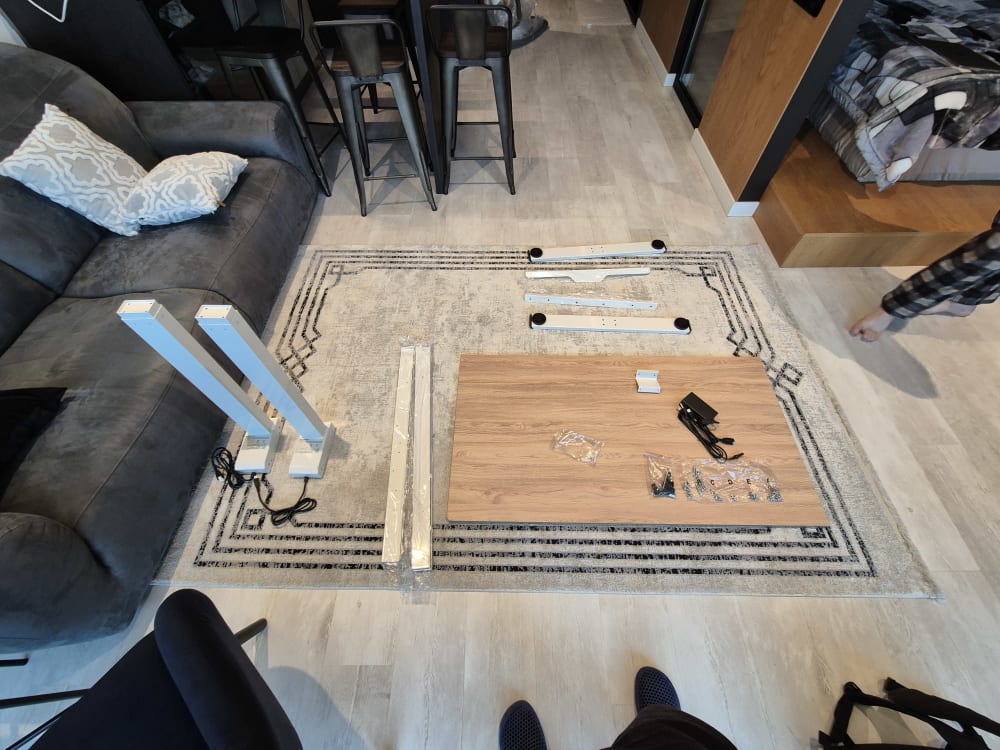
- Lack of Preparation: The tabletop and the lifting frame were ordered separately; the chipboard lacked factory holes or mounting marks.
- Hidden Defect: Upon unpacking, a damaged corner of the tabletop was discovered—a logistics defect that required strategic positioning during assembly.
- Infrastructure: It was necessary to integrate a third-party power strip and organize the power supply to maintain clean lines (Minimalist Setup).
2. Execution: Optimization and Mounting ⚙️
Instead of blindly following the instructions, we applied the Clean Workspace logic.
Construction & Mechanics
- Power Assembly: Frame assembly with torque control on all connections to eliminate wobbling at maximum height.
- Custom Marking: Precise "on-site" marking of holes considering weight distribution and minimizing the visibility of the damaged chipboard corner.
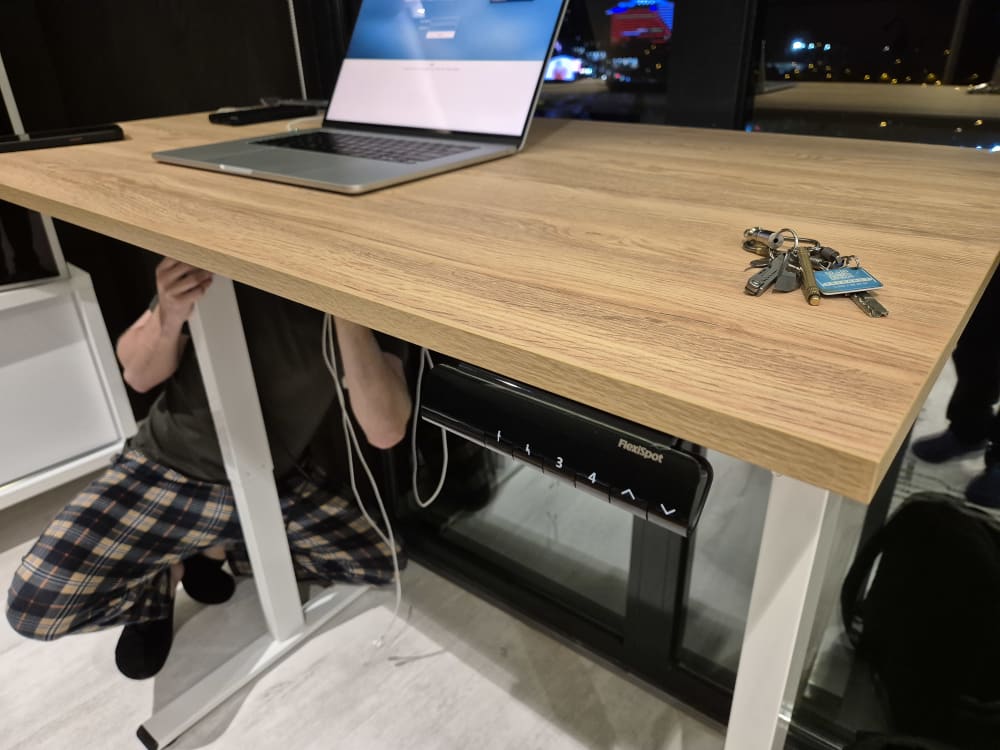
- Control Installation: The control panel (height controller) was placed in a quick-access zone but protected from accidental presses by the edge of the tabletop.
Cable Management 2.0
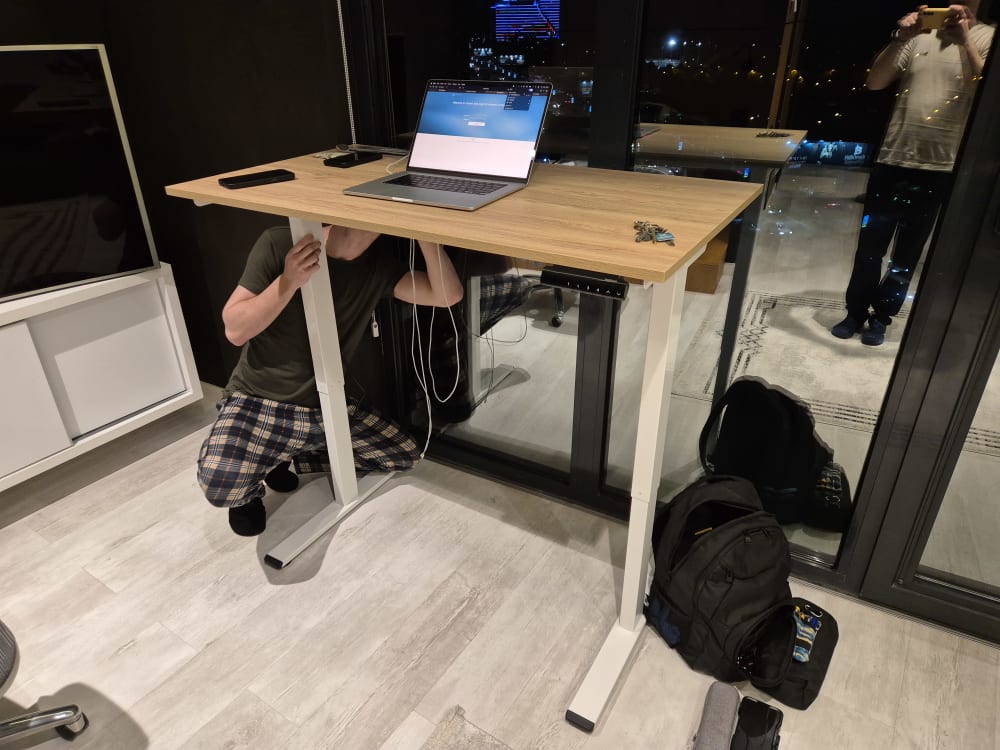
- Circuit Revision: We ignored the manufacturer's standard recommendation to place the power supply unit (PSU) externally. The PSU and all primary wiring were discreetly integrated under the tabletop.
- Peripheral Integration: The client's power strip was secured with heavy-duty double-sided adhesive in a hidden area. This allowed all equipment (monitors, laptop) to be powered through a single cable.
- Fixation: All cable runs were routed through cable channels and secured with specialized clips. Wires do not dangle or stretch when the desk is raised.
3. Commissioning and UX 🚀
After assembly, the system underwent a full testing cycle:
- Calibration: Min/Max limit points, anti-collision sensor sensitivity, and movement smoothness were verified.
- Profiling: Two presets were configured and saved for the user: the optimal height for sitting and an ergonomically sound position for standing.
- Training: A brief orientation on controller operation and error resetting during power surges was provided.
4. Outcome 📈
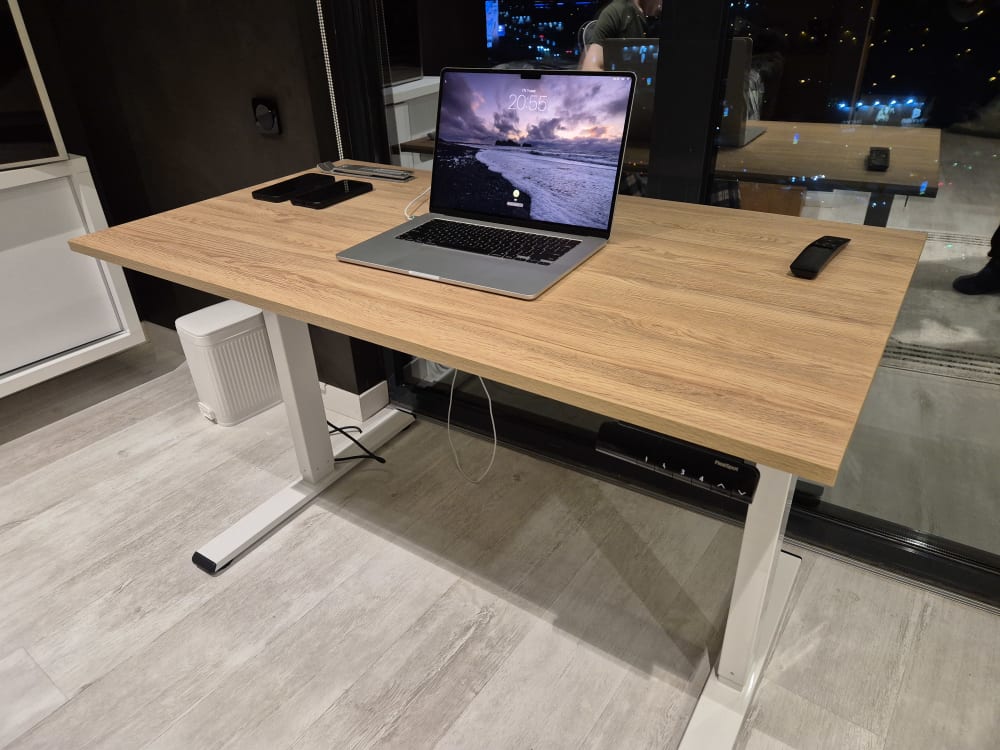
- 100% Readiness: The client received a fully functional workspace, ready for use 5 minutes after the technician's departure.
- Aesthetics: Zero cable visibility under the desk at any height setting.
- Durability: Secure fixation and proper cable routing prevent fraying and connector failure.
A workspace is an extension of the engineer. Attention to detail during assembly (hidden power supply, correct marking) transforms an ordinary desk into a professional tool that doesn't distract from the code.